



Hemp and cannabis. Legally, they’re defined by a single number: 0.3% THC. If your plant tests below that threshold, it’s hemp. Above it, it’s cannabis. From a cultivation and processing standpoint, the plants are nearly identical. But when it comes to insurance, that 0.3% might as well be a canyon.
Hemp businesses operate under the 2018 Farm Bill, which legalized hemp at the federal level and removed it from the Controlled Substances Act. That sounds like a green light, but the insurance industry didn’t suddenly start treating hemp like soybeans or corn. Carriers are still cautious, underwriting is still strict, and plenty of insurers won’t touch hemp at all—even though it’s federally legal.
Cannabis businesses, meanwhile, are navigating a patchwork of state-legal, federally-illegal regulations with even fewer insurance options, higher premiums, and more exclusions. If you’re running a hemp operation in New York and assume your coverage needs are the same as a licensed cannabis grower or processor down the road, you’re probably wrong. And if you’re trying to use a standard farm or commercial policy without disclosing your hemp operations, you’re setting yourself up for denied claims and coverage gaps.
At Weed Ross, we work with both hemp and cannabis businesses across New York, and one of the most common questions we get is: “What’s actually different about insuring hemp versus cannabis?” The answer matters—because the wrong coverage can cost you everything.
In this article, we’ll cover:
- The legal distinction between hemp and cannabis and why it matters for insurance
- What coverage hemp businesses need (and where they overlap with cannabis)
- Key differences in underwriting, premiums, and carrier availability
- Common mistakes hemp operators make with insurance
- How to find the right coverage for hemp farming, processing, or retail in New York
The Legal Line: Why 0.3% THC Changes Everything for Insurance
The 2018 Farm Bill legalized hemp nationwide, but insurance companies don’t move as fast as legislation. Even though hemp is federally legal, many carriers still treat it as a “non-admitted” or specialty risk—meaning you’re not getting coverage from the same insurers that write policies for traditional farms or food manufacturers.
Why? A few reasons:
- Industry instability: Hemp markets are volatile. Prices have crashed, supply chains are still developing, and plenty of hemp businesses fail within their first few years. Insurers don’t like unpredictable industries.
- Product risk: Hemp-derived CBD products have their own regulatory and liability concerns. The FDA hasn’t fully sorted out how CBD should be regulated, and that uncertainty makes insurers nervous.
- Testing and compliance: Hemp has to be tested to confirm it’s under 0.3% THC. If a crop tests “hot” (above the limit), it has to be destroyed. That’s a coverage challenge insurers are still figuring out.
- Confusion with cannabis: Some carriers lump hemp and cannabis together and decline both outright. Others require extensive documentation to prove you’re operating a legal hemp business and not hiding cannabis activity.
Cannabis businesses, on the other hand, are operating under state licenses in New York but remain federally illegal. That means they’re stuck with a much smaller pool of specialty insurers, higher premiums, and policies that come with more exclusions and tighter terms.
For hemp businesses, the good news is you have more options. The bad news is you still need to work with carriers who actually understand hemp and are willing to underwrite it properly.
Core Coverage Needs for Hemp Businesses
Whether you’re growing, processing, or selling hemp products in New York, here are the foundational coverages you need to have in place.
General Liability Insurance
General liability (GL) covers third-party bodily injury, property damage, and personal/advertising injury claims. For hemp businesses, this includes:
- Customer injuries at your retail location or processing facility
- Property damage caused by your operations (e.g., damage to a leased facility)
- Advertising injury claims (rare, but possible if competitors allege unfair practices)
Hemp-specific GL policies need to explicitly state that hemp operations are covered. Standard GL forms often exclude cannabis and hemp unless specifically endorsed. Don’t assume your policy covers hemp just because it doesn’t explicitly exclude it—get it in writing.
Product Liability Insurance
If you’re processing hemp into CBD oils, tinctures, edibles, topicals, or any consumer product, product liability is non-negotiable. This coverage protects you if someone claims your product caused them harm—whether it’s an allergic reaction, mislabeling, contamination, or incorrect dosing.
Hemp product liability is tricky because:
- CBD products are still in a regulatory gray area with the FDA
- Mislabeling or inaccurate THC testing can lead to claims
- Contamination (pesticides, heavy metals, solvents) is a real risk in processing
Make sure your product liability coverage explicitly includes hemp-derived products and that your limits are adequate for the volume you’re producing and selling.
Crop Insurance
Hemp farmers face the same risks as any other crop—weather, pests, disease, equipment failure—but crop insurance for hemp is harder to find and more expensive than traditional crop coverage.
Standard multi-peril crop insurance (MPCI) through the federal government doesn’t cover hemp the same way it covers corn or wheat. You’ll likely need private crop insurance written specifically for hemp, which covers:
- Loss from fire, hail, wind, and other weather events
- Theft (hemp is a target, especially close to harvest)
- Crop destruction due to testing hot (above 0.3% THC)
Not all carriers offer hemp crop insurance, and those that do often require detailed growing plans, testing protocols, and security measures.
Property Insurance
If you own or lease farmland, greenhouses, processing facilities, or retail space, you need property coverage for:
- Buildings and structures
- Processing and extraction equipment
- Inventory (raw hemp, finished products)
- Business personal property (furniture, computers, packaging equipment)
Hemp processing facilities often include expensive extraction equipment—CO2 extractors, ethanol systems, distillation setups—that need to be properly valued and covered. Make sure your property policy reflects the actual replacement cost of this equipment, not just the purchase price.
Commercial Auto Insurance
If you’re transporting hemp crops, products, or materials across state lines or locally, you need commercial auto coverage. Hemp is federally legal, but interstate transport still requires documentation (certificates of analysis, manifests, etc.) and there have been cases of hemp shipments being seized by law enforcement in states with unclear policies.
Your commercial auto policy should cover:
- Vehicles used for business purposes
- Cargo coverage for hemp products in transit
- Liability for accidents involving business vehicles
Workers’ Compensation
If you have employees—farm workers, processing staff, retail employees—you’re required to carry workers’ compensation in New York. Hemp businesses aren’t exempt, and the manual labor involved in farming and processing can lead to injuries.
Make sure your workers’ comp carrier knows you’re operating a hemp business. Misclassifying your business or failing to disclose hemp operations can lead to denied claims or policy cancellations.
Key Differences Between Hemp and Cannabis Insurance
So what’s actually different when you compare hemp insurance to cannabis insurance? Here’s the breakdown:
Carrier Availability
- Hemp: You have more options. While not every carrier will write hemp, there are enough willing insurers that you can shop around and find competitive pricing.
- Cannabis: Far fewer carriers write cannabis coverage, and most require specialty programs with higher premiums and more restrictive terms.
Premium Costs
- Hemp: Generally lower than cannabis, but still higher than traditional agriculture or retail businesses. Expect to pay a premium for the “emerging industry” risk.
- Cannabis: Significantly more expensive. Cannabis businesses often pay 2-5x what a comparable non-cannabis business would pay for the same coverage.
Product Liability Exposure
- Hemp: Product liability is a concern, especially for CBD products, but the risk profile is lower than cannabis because hemp products contain minimal THC and are federally legal.
- Cannabis: Much higher product liability exposure due to THC content, intoxicating effects, and the potential for impairment-related claims. Edibles and concentrates carry particularly high risk.
Crop Coverage
- Hemp: Private crop insurance is available but limited. Hot testing (above 0.3% THC) is a major coverage challenge.
- Cannabis: Crop insurance exists but is expensive and often includes high deductibles. Theft and regulatory compliance risks are higher.
Federal vs. State Compliance
- Hemp: Federally legal under the 2018 Farm Bill, but still subject to state-level regulations and USDA oversight.
- Cannabis: Federally illegal, state-legal in New York. This creates complications for interstate commerce, banking, and insurance.
Common Mistakes Hemp Businesses Make with Insurance
Even hemp operators who know they need insurance often make avoidable mistakes that leave them exposed.
Using a Standard Farm or Business Policy Without Disclosure
The biggest mistake: getting a standard farm policy, commercial package, or BOP and not telling the insurer you’re growing or processing hemp. When a claim happens, the carrier investigates, discovers the hemp operations, and denies coverage based on a material misrepresentation. You’re left holding the entire loss.
Always disclose hemp operations upfront. If the carrier won’t cover hemp, find one that will.
Assuming CBD Products Are Covered Under General Liability
Many hemp retailers or manufacturers assume their general liability policy covers CBD products. It doesn’t—unless it’s explicitly stated. You need product liability coverage, and it needs to be endorsed for hemp-derived products.
Underinsuring Processing Equipment
Hemp extraction equipment is expensive—$50,000 to $500,000+ depending on the scale. If you insure it based on depreciated value instead of replacement cost, you’ll be underinsured when something breaks or burns down.
Not Having Cargo or Transit Coverage
If you’re moving hemp across state lines or even locally, and it’s stolen or damaged in transit, a standard auto policy won’t cover the cargo. You need specific cargo or inland marine coverage for hemp products.
Ignoring Compliance and Testing Requirements
Insurers want to see that you’re following USDA or state hemp programs, conducting regular testing, and maintaining compliance with THC limits. If you’re not documenting this, you may have trouble getting coverage—or getting claims paid.
How Weed Ross Helps New York Hemp Businesses Navigate Insurance
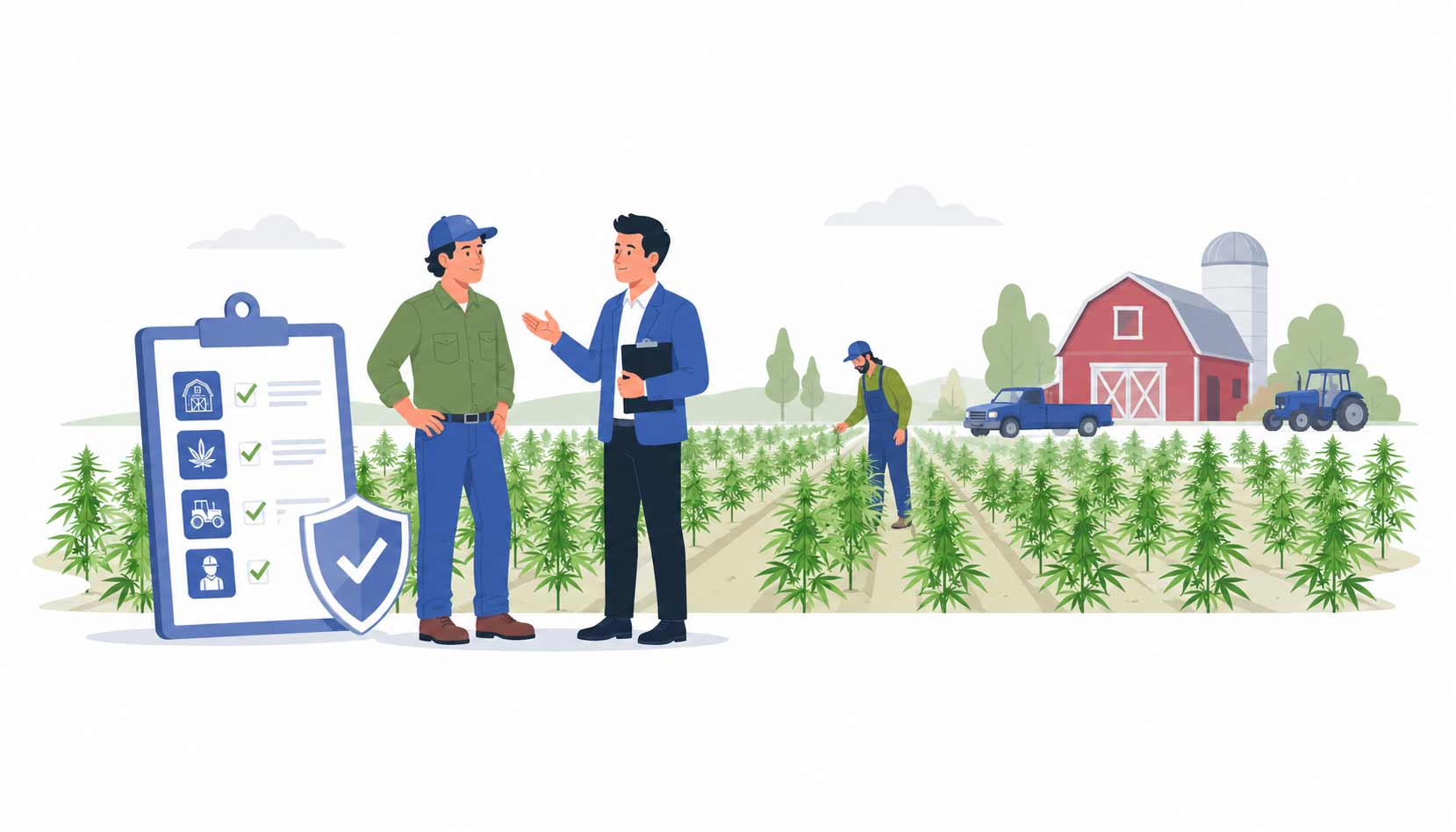
Hemp insurance isn’t one-size-fits-all, and it’s not something you can grab online and hope for the best. At Weed Ross, we work with hemp farmers, processors, and retailers across New York to build coverage that reflects what you’re actually doing—and that will respond when you need it.
We help you:
- Find carriers that actually write hemp coverage and understand the industry
- Structure policies that cover farming, processing, product manufacturing, or retail—whatever applies to your operation
- Make sure product liability, crop coverage, and property limits are adequate for your scale
- Avoid the common mistakes that lead to denied claims or gaps in coverage
If you’re running a hemp business in New York and you’re not 100% confident your insurance is built for hemp—not just farming or manufacturing in general—let’s talk. Reach out to Weed Ross and we’ll walk through your operation, your risks, and your current coverage to make sure you’re actually protected.