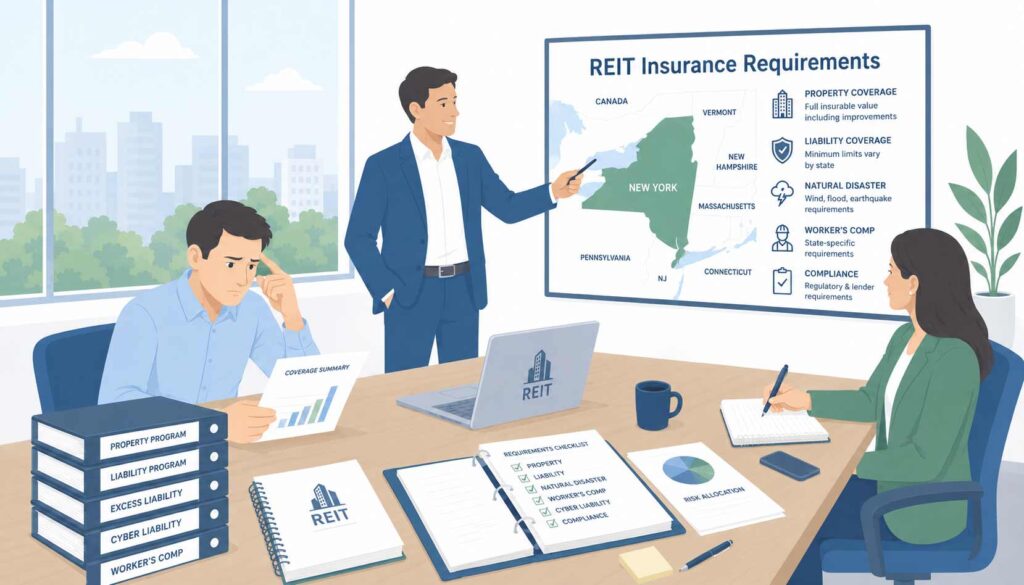




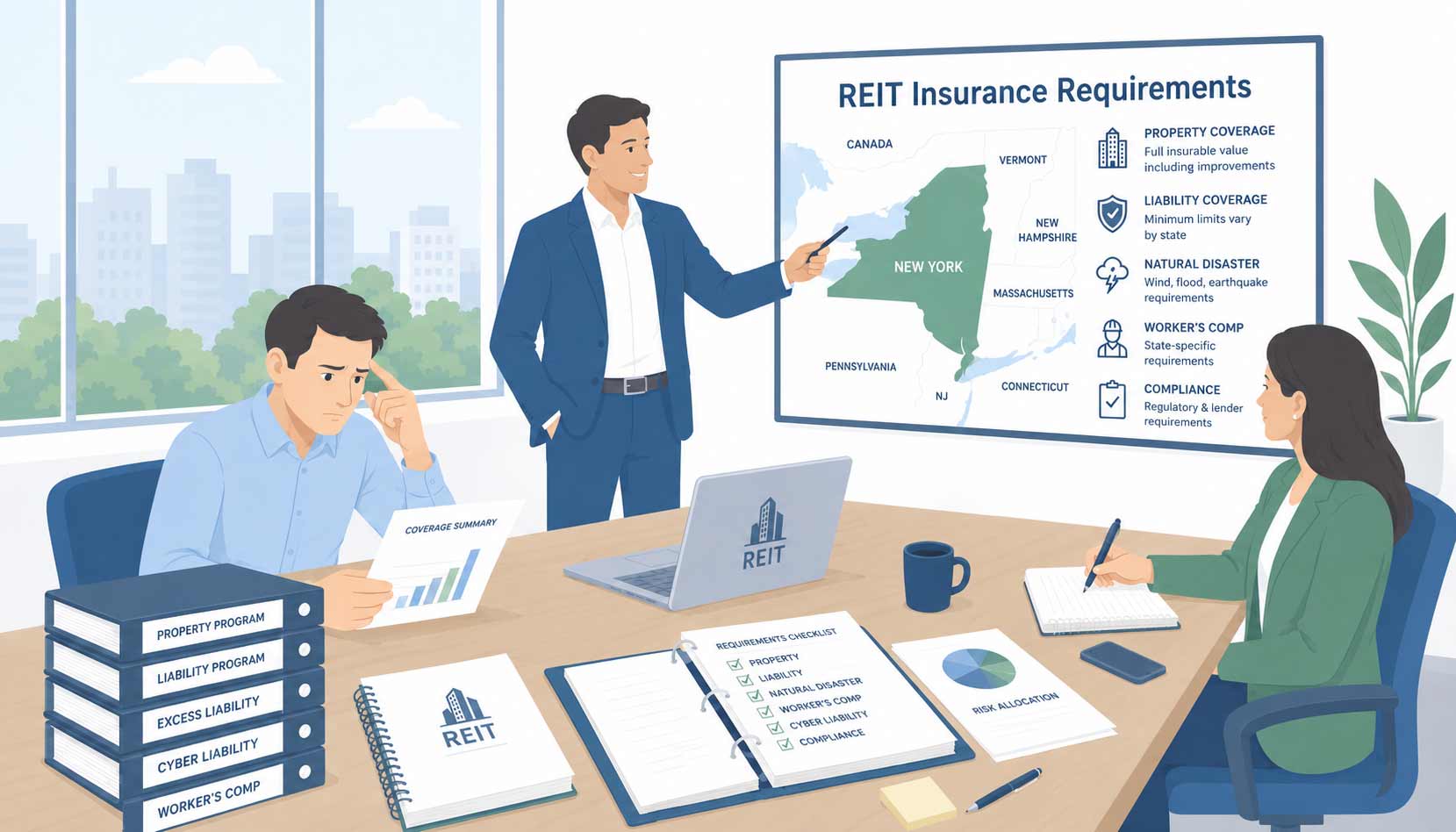
Managing insurance for a Real Estate Investment Trust with properties in one state is complicated enough. Spread that portfolio across five, ten, or fifteen states, and the complexity multiplies fast. You’re not just dealing with property and liability coverage anymore—you’re coordinating policies across different regulatory environments, managing state-specific insurance requirements, satisfying lenders and investors in multiple jurisdictions, and making sure your master insurance program complies with the most restrictive requirements across your entire footprint.
The challenge isn’t just buying enough insurance—it’s structuring coverage that works consistently across different states while meeting the specific requirements of each jurisdiction. And at Weed Ross, that’s one of our specialties.
Some states mandate certain coverage types or minimum limits. Some require specific policy language or endorsements. Lenders in different states may have different insurance requirements. And if your REIT operates in states with vastly different risk profiles—hurricane exposure, earthquake zones, tornado alley—your catastrophe exposure and insurance costs can vary wildly by region. What this article breaks down:
- Why multi-state REITs face different insurance challenges than single-state portfolios
- State-specific insurance requirements and how they vary across regions
- Coordinating coverage across properties in different jurisdictions
- Lender and investor insurance requirements in multi-state deals
- How to structure master policies that comply across all your operating states
Why Multi-State REIT Portfolios Create Insurance Complexity
When your portfolio is contained within one state, you’re dealing with one set of insurance regulations, one regulatory environment, and relatively consistent risk profiles. Once you cross state lines—especially when you’re operating in regions as different as the Northeast, Midwest, South, and West—everything gets more complicated. Here’s what changes:
Different State Insurance Requirements
Every state has its own insurance regulations. Some require certain types of coverage or minimum limits for specific property types. Some mandate specific policy language or endorsements. Some have unique liability standards or tort laws that affect how much coverage you need.
The variability is significant. Northeastern states like New York and Massachusetts have specific workers’ compensation and disability insurance requirements. States like Texas have different tort law standards that affect liability exposure. Midwestern states face tornado and hail risks that influence property coverage terms. Understanding and complying with each state’s requirements while maintaining a cohesive insurance program is a major coordination challenge.
If your REIT operates across ten states, you need to understand the insurance requirements in all ten—and make sure your master policy satisfies the most restrictive requirements across all jurisdictions.
Varying Risk Profiles and Catastrophe Exposure Across Regions
Properties in different states face dramatically different perils, and your insurance program needs to account for these regional variations:
- Hurricane and Windstorm Zones: Coastal properties in states like Texas face significant hurricane exposure. These areas often require separate windstorm coverage with percentage-based deductibles (2-5% of property value) rather than flat dollar amounts. A major hurricane can trigger massive deductibles across multiple properties simultaneously.
- Tornado and Hail Exposure: Midwestern states—including Oklahoma, Kansas, Missouri, and parts of Illinois, Indiana, and Ohio—sit in tornado alley. While standard property policies typically cover wind and hail, the frequency and severity of claims in these regions can drive up premiums and require higher deductibles.
- Earthquake Risk: Properties in seismically active states like Washington face earthquake exposure. Lenders often require earthquake coverage for properties in high-risk zones, which comes with expensive premiums and high deductibles (often 10-15% of property value).
- Wildfire Exposure: Western states, including Colorado and parts of Washington, have increasing wildfire risk. This affects both availability and cost of property coverage in certain areas.
- Winter Weather: Northeastern and upper Midwestern states—New York, Pennsylvania, Massachusetts, Connecticut, Minnesota, Ohio—face freeze risk, ice dams, and snow load issues. Properties in these regions need coverage that accounts for winter-related damage, and vacant properties during cold months require specific winterization protocols.
Your insurance program needs to layer catastrophe coverage, adjust deductibles by region, and account for these perils without creating gaps or administrative complexity.
Lender Requirements Vary By State and Property Type
Lenders in different states—and even different lenders in the same state—impose different insurance requirements. Common variations include:
- Liability Limits: Some states have higher litigation rates and more plaintiff-friendly legal environments, which leads lenders to require higher general liability limits. A lender financing properties in Texas or New Jersey might require $2 million in liability coverage where a lender in Kansas might accept $1 million for similar properties.
- Wind and Hurricane Coverage: Lenders financing coastal properties require proof of separate windstorm coverage and specific deductible structures. In Texas, for example, properties in certain counties must carry Texas Windstorm Insurance Association (TWIA) coverage or equivalent private market wind insurance.
- Earthquake Requirements: Lenders financing properties in Washington or other seismically active areas often mandate earthquake coverage, even though it’s expensive and comes with high deductibles.
- Environmental Coverage: Industrial properties in states with heavy manufacturing history—Ohio, Pennsylvania, Illinois, Indiana, New Jersey—often require environmental liability coverage due to potential contamination from previous uses.
- Building Ordinance/Law Coverage: Lenders in states with older building stock and strict building codes (New York, Massachusetts, Connecticut, New Jersey) frequently require ordinance or law coverage to pay for code upgrades required after a loss.
- Flood Insurance: Properties in FEMA-designated flood zones require flood coverage regardless of state, but lenders also have varying requirements for properties outside mapped zones, especially in states with significant river or coastal exposure (Texas, Missouri, Pennsylvania, New Jersey, Connecticut, Massachusetts).
If you’re financing properties with multiple lenders across different states, you need to track and satisfy each lender’s requirements individually while maintaining a cohesive overall insurance program.
Core Insurance Coverages for Multi-State REIT Portfolios
Regardless of how many states you operate in, certain coverage types are foundational. Here’s what you need and how requirements vary:
Commercial Property Insurance
This covers your buildings, tenant improvements, and business personal property. For multi-state REITs:
- Replacement Cost Variations: Rebuilding costs vary dramatically by state and region. Replacing a property in New York or Massachusetts costs far more per square foot than rebuilding in Missouri or Oklahoma. Your dwelling limits need to reflect regional construction costs, labor rates, and material availability.
- Region-Specific Perils: Different states require different endorsements. Wind coverage for Texas coastal properties, earthquake provisions for Washington, freeze protection for Minnesota properties, wildfire considerations for Colorado—all of these need to be structured into your property coverage.
- Valuation Standards: Some states and lenders have specific requirements for how property values are determined—replacement cost, agreed value, actual cash value—and your master policy needs to accommodate these variations.
General Liability Insurance
General liability covers third-party bodily injury and property damage claims. Liability standards and tort laws vary significantly across states, which affects how much coverage you need.
States with higher litigation rates or more plaintiff-friendly legal environments often justify higher baseline limits.
Properties in dense urban areas (New York metro, parts of New Jersey, Illinois) may need higher limits due to increased foot traffic and liability exposure. Mixed-use and hospitality properties in tourism markets need additional coverage for guest-related risks.
Umbrella / Excess Liability
An umbrella policy provides consistent excess limits across all properties regardless of state-specific variations in underlying coverage. For multi-state REITs, this is essential because it standardizes your liability protection—a claim in one state gets the same excess coverage as a claim in another, regardless of differences in underlying policy terms.
Flood Insurance
Properties in flood zones require separate flood coverage. Multi-state REITs often have properties in coastal flood zones, river valleys, and urban areas with drainage issues across their footprints. Coordinating flood coverage across all affected properties while managing NFIP limits (capped at $500,000 for commercial buildings) and supplemental private flood options is a key compliance challenge.
Earthquake Insurance
Properties in seismically active regions need standalone earthquake coverage. This is expensive and typically comes with high deductibles (10-15% of property value), so many REITs choose to self-insure lower-value properties and only purchase coverage where lenders mandate it or exposure is highest.
Environmental and Pollution Liability
Former industrial properties, manufacturing sites, gas stations, and dry cleaners carry environmental risk. Lenders in states with significant industrial history often require environmental liability coverage before financing acquisitions of these properties. This protects against cleanup costs, third-party claims, and regulatory fines.
Workers’ Compensation (If Applicable)
If your REIT employs on-site staff across multiple states, workers’ comp requirements vary by state. Each jurisdiction has its own workers’ comp laws, mandatory coverage requirements, rate structures, and classification systems. Some states require additional coverage like statutory disability insurance alongside workers’ comp.
Structuring Master Policies That Work Across Multiple States
For REITs operating across multiple states, the most efficient approach is a master or blanket property policy that covers all locations under one coordinated program.
Single Master Policy with Scheduled Properties
Each property is listed individually on the policy, with specific values, endorsements, and state-specific coverages noted. This provides:
- Centralized administration and one renewal date
- Consistent terms and conditions across all properties
- State-specific endorsements and coverages applied where needed
- Easier management of additions and deletions as you acquire or dispose of properties
This approach works well for portfolios with properties in multiple regions with varying risk profiles and regulatory requirements.
Blanket Property Coverage with Geographic Splits
A blanket policy covers multiple properties under one total limit, but you can structure it with geographic or regional splits to account for different catastrophe exposures. For example:
- Gulf Coast properties: separate wind coverage, higher deductibles for hurricane exposure
- Seismically active regions: earthquake coverage or higher deductibles
- Tornado-prone Midwest: appropriate wind/hail terms
- Northeastern properties: winter weather and coastal storm provisions
This approach balances efficiency with risk management while accounting for regional differences.
State-Specific Endorsements and Wording
Your master policy needs to include state-specific endorsements to comply with unique requirements in each jurisdiction. This might include:
- Wind deductible language and separate windstorm policy coordination in coastal states
- Earthquake disclosures and coverage options in seismically active states
- Building ordinance/law coverage in states with older building stock
- Environmental exclusions with optional coverage in industrial states
- Winter weather and freeze protection in northern states
Working with an agency that can coordinate these state-specific requirements across all your operating states eliminates the need to manage multiple local agents or worry about gaps when you cross state lines.
Administrative Challenges of Multi-State Compliance
Beyond the coverage itself, multi-state REITs face significant administrative complexity:
Certificate Management: Every lender, property manager, and contractor needs certificates of insurance. Tracking and issuing certificates across dozens or hundreds of properties in multiple states is a full-time job without proper systems.
- State Filing Requirements: Each state has different insurance filing, tax, and regulatory processes. Managing compliance across multiple jurisdictions requires coordination and attention to detail.
- Lender Notifications: Lenders require notification of policy changes, renewals, and cancellations (typically 30-60 days advance notice). Missing a notification can trigger a loan default.
- Adding and Removing Properties: As you acquire and dispose of properties across state lines, your insurance needs to be updated immediately—before closing on acquisitions, and removed promptly after dispositions to avoid overpaying.
Centralized management through a single broker with multi-state licensing and capabilities is the only practical way to handle this complexity at scale.
How Weed Ross Helps Multi-State REITs Manage Insurance Complexity
Managing insurance for a multi-state REIT requires coordination, expertise, and the ability to work across multiple jurisdictions without handing off pieces of your portfolio to different local agents in each state.
Weed Ross is licensed in 18 states across the country:
- Colorado
- Connecticut
- Illinois
- Indiana
- Kansas
- Kentucky
- Massachusetts
- Minnesota
- Missouri
- Nevada
- New Jersey
- New York
- Ohio
- Oklahoma
- Pennsylvania
- Tennessee
- Texas,
- Washington
That means we can serve as your single point of contact for portfolios spanning these regions, eliminating the need to coordinate multiple agents across different states. We help multi-state REITs:
- Structure master or blanket policies that comply with state-specific requirements across all your operating jurisdictions
- Coordinate catastrophe coverage (flood, wind, earthquake) based on regional exposure and lender requirements
- Manage lender and investor insurance requirements across your entire portfolio
- Track state-specific endorsements, filings, and regulatory requirements without you needing to manage relationships with multiple local agents
- Add and remove properties efficiently as your portfolio evolves across state lines
If you’re managing a REIT with properties across multiple states and dealing with a patchwork of local agents, policies that don’t coordinate, and compliance requirements that fall through the cracks, there’s a better way. Reach out to Weed Ross and we’ll review your portfolio footprint, your current coverage structure, and your compliance needs—then build a master program that works across all the states where you operate.