



Running a cannabis business in New York means navigating a maze of regulations, compliance requirements, and operational challenges that most traditional businesses never have to think about. You’re dealing with state licensing, seed-to-sale tracking, strict security protocols, and a constantly evolving legal landscape—all while trying to build a profitable operation.
Insurance is one more piece of that puzzle, but it’s not optional. Between lease requirements, lender expectations, investor demands, and basic risk management, you need real coverage. The problem is that cannabis insurance isn’t like calling up any agent and grabbing a standard business policy. Many carriers won’t touch the industry at all, and the ones that do often require specialized programs with higher premiums and tighter underwriting.
At Weed Ross, we work with cannabis operators across New York—growers, processors, dispensaries, and ancillary businesses—helping them build insurance programs that actually fit their operations. As an independent agency with access to cannabis-friendly carriers, we can structure liability, property, and product coverage that satisfies regulators, landlords, and lenders without leaving you underinsured or overpaying for coverage you don’t need.
In this article, we’ll cover:
- Why cannabis businesses need specialized insurance (not just standard business policies)
- The three core coverage types: general liability, property, and product liability
- How coverage needs differ by license type (cultivator, processor, dispensary, delivery, ancillary)
- Additional coverages that matter for cannabis operations
- How Weed Ross helps New York cannabis businesses navigate this complex insurance landscape
Why Cannabis Businesses Can’t Use Standard Business Insurance
Most traditional business insurance policies contain cannabis exclusions—explicit language that denies coverage for any claims related to marijuana or cannabis operations. Even if a carrier is willing to write you a policy, there’s a good chance it won’t respond when you actually need it.
This isn’t just a technicality. If you’re operating under a homeowners policy, a basic business owners policy (BOP), or a general commercial package that wasn’t explicitly written for cannabis, you could be setting yourself up for a nasty surprise when a claim hits. Your lease might require “proof of insurance,” but that proof is only meaningful if the policy actually covers what you do.
Cannabis-specific insurance programs are underwritten with the industry in mind. Carriers that write these policies understand:
- The regulatory environment in New York
- The unique property exposures (high-value crops, specialized equipment, security requirements)
- Product liability concerns tied to edibles, concentrates, and retail products
- The cash-heavy nature of many cannabis operations
- Higher risk of theft, burglary, and internal fraud
These programs cost more than vanilla business insurance, but they’re also designed to actually pay claims when something goes wrong. That’s the trade-off.
The Three Core Coverage Types Every Cannabis Business Needs
Whether you’re growing, processing, or selling cannabis in New York, there are three foundational coverage types you need to get right: general liability, property insurance, and product liability. Let’s break down what each one does and why it matters.
General Liability Insurance for Cannabis Businesses
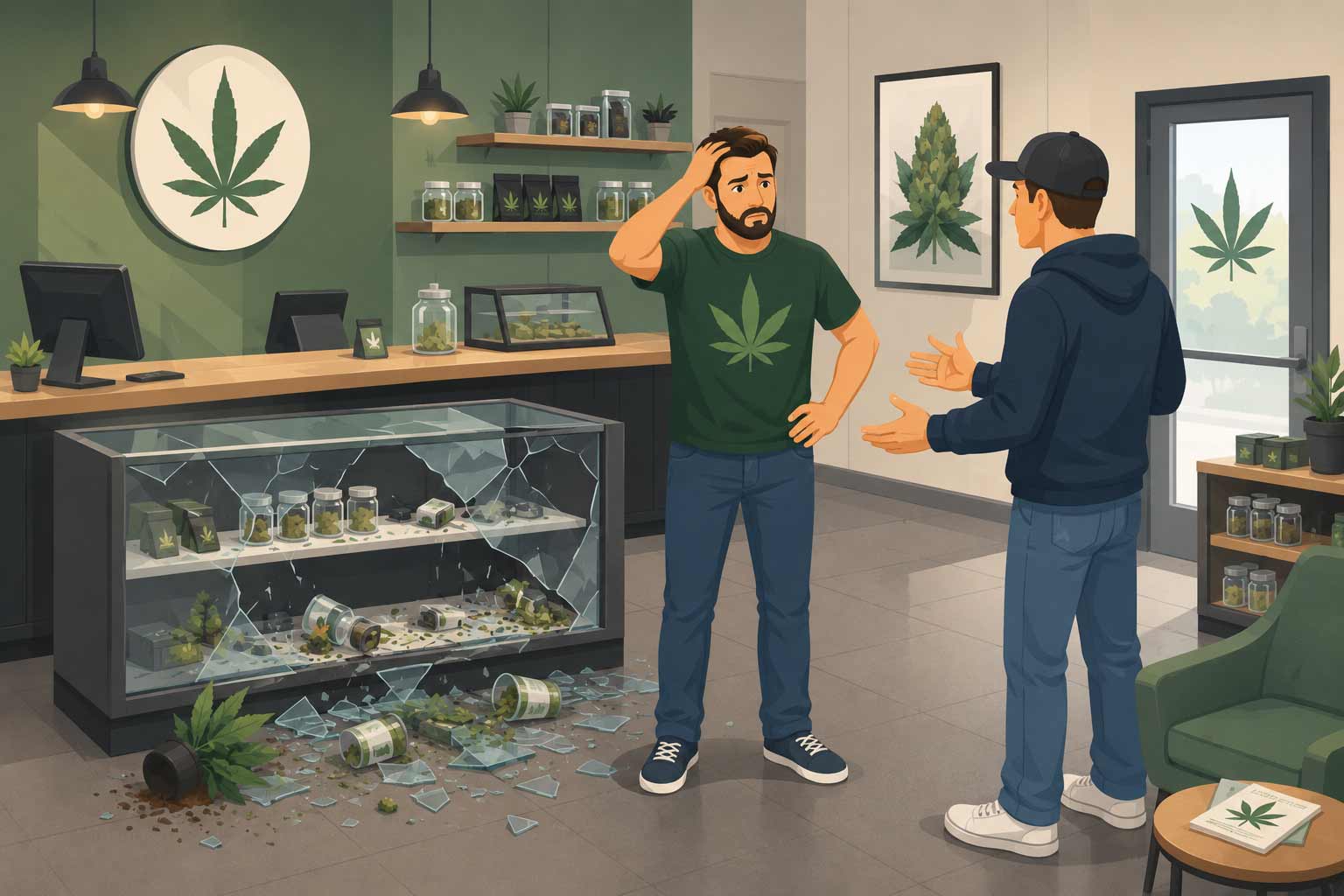
General liability (GL) is the baseline for most cannabis operations. It protects you if a third party claims your business caused them bodily injury, property damage, or certain types of personal and advertising injury.
Common scenarios where GL kicks in:
- A customer slips and falls in your dispensary
- A visitor to your grow facility is injured on your premises
- A delivery driver damages a customer’s property during a drop-off
- A contractor working at your processing facility claims they were hurt due to unsafe conditions
- Another business alleges your advertising caused them reputational harm
Property Insurance for Cannabis Operations
Cannabis property insurance is where things get expensive—and critical. You’re dealing with high-value inventory, specialized equipment, security systems, and facilities that are attractive targets for theft. Property insurance covers:
- Buildings and tenant improvements: If you own your facility or have made significant improvements to a leased space, property coverage protects that investment against fire, wind, hail, vandalism, and other covered perils.
- Business personal property: Equipment, furniture, computers, HVAC systems, grow lights, extraction equipment, packaging machinery—all the physical stuff you need to operate.
- Inventory and crops: This includes plants at various growth stages (immature plants, flowering plants, harvested product) and finished goods ready for sale or distribution. Some policies distinguish between “living plant material” and “dried cannabis” with different sublimits or coverage terms.
- Security and monitoring systems: Given the regulatory and practical need for cameras, alarms, and access control, protecting this equipment is essential.
Product Liability Insurance for Cannabis Products
This is where cannabis businesses face unique exposure. Product liability coverage responds if someone claims your product caused them harm—illness, injury, or other damages. For cannabis operators, this can include:
- Edibles and infused products: Mislabeling, contamination, incorrect dosing, allergen exposure, or foreign objects in food products.
- Concentrates and extracts: Chemical residues, unsafe extraction processes, or products that contain harmful solvents or additives.
- Flower and pre-rolls: Mold, pesticides, heavy metals, or other contaminants that make it past testing.
- Topicals and tinctures: Allergic reactions, skin irritation, or other adverse effects.
Even if you follow every regulation, conduct rigorous testing, and maintain meticulous quality control, you can still face a product liability claim. Someone might allege they got sick, had an adverse reaction, or suffered harm from your product—and you’ll need coverage to defend yourself and pay damages if a claim is valid.
How Coverage Needs Differ by License Type
Not all cannabis businesses have the same insurance needs. Here’s how coverage priorities shift depending on your role in the supply chain.
Cultivators and Growers
- High-value crops that can be wiped out by fire, equipment failure, or theft
- Specialized grow equipment (lights, HVAC, irrigation, security)
- Premises liability (employees, contractors, inspectors, investors visiting the facility)
- Business interruption if a loss shuts down your operation mid-cycle
Must-have coverages: General liability, property (including crop coverage), business interruption, workers’ compensation (if you have employees).
Nice-to-have coverages: Equipment breakdown, cyber liability (if you’re managing seed-to-sale compliance systems), umbrella liability.
Processors and Manufacturers
- Product liability (especially for edibles, concentrates, and infused products)
- Extraction equipment and machinery (expensive and potentially dangerous)
- Inventory at various processing stages
- Regulatory compliance and testing requirements
Must-have coverages: General liability with product liability, property (building, equipment, inventory), product recall, workers’ compensation.
Nice-to-have coverages: Pollution liability (if using solvents or chemicals), equipment
breakdown, cargo/transit coverage if you’re moving product between facilities.
Dispensaries and Retailers
- High foot traffic and customer interactions (slip-and-fall, customer injury)
- Cash-heavy operations (theft, robbery, employee dishonesty)
- Inventory on display and in storage
- Product liability if something you sold causes harm
Must-have coverages: General liability with product liability, property (inventory, fixtures, security systems), crime/theft coverage, workers’ compensation.
Nice-to-have coverages: Cyber liability (if you take card payments or manage customer data), employment practices liability (EPLI) as you grow your team.
Delivery Services
- Vehicle accidents during deliveries
- Product theft or loss in transit
- Driver safety and liability
Must-have coverages: Commercial auto, general liability, cargo/transit coverage, workers’ compensation.
Nice-to-have coverages: Hired and non-owned auto (if drivers use their own vehicles), umbrella liability.
Ancillary Cannabis Businesses
If you’re a cannabis-adjacent business—testing labs, security companies, compliance software, packaging suppliers, real estate landlords leasing to cannabis operators—you may not need full cannabis coverage, but you still need to disclose your cannabis involvement to your insurer.
Testing labs: Professional liability (E&O), general liability, property, cyber.
Landlords: Cannabis-tenant endorsements on your property policy, liability coverage, loss of rents.
Tech and compliance providers: Professional liability, cyber liability, general liability.
How Weed Ross Helps New York Cannabis Businesses Navigate Insurance
Cannabis insurance is complicated, and it’s not getting simpler anytime soon. At Weed Ross, we specialize in helping New York cannabis operators—from small craft growers to multi-site dispensaries—build insurance programs that actually work.
Here’s how we help:
- We work with carriers that actually write cannabis coverage, so you’re not wasting time with insurers who’ll decline you outright.
- We map your specific operation (license type, facility size, product lines, employee count) to the right mix of liability, property, and product coverage.
- We explain what you’re buying in plain language—no jargon, no assumptions that you already know this stuff.
- We review your coverage as your business grows, adding locations, licenses, or product lines.
If you’re launching, scaling, or simply trying to make sure your current coverage actually protects what you’ve built, get in touch with the team at Weed Ross. We’ll walk through your operation, identify gaps, and build a program that satisfies regulators, landlords, and lenders—while actually covering the risks you face every day.